Thursday, April 30, 2015

Native American Firsts

 
640px-A_Quechua_girl_and_her_Llama
The January issue of National Geographic magazine is called “The Firsts Issue”.  I think that Native Americans might “take issue” with some of the “firsts”.   Chocolate is one of the very few firsts attributed to ancient Americans.  So, maybe we should revisit this topic from a Native American bias.
 
Since the earliest date for American occupation only goes back to 16,000 B.C., I guess we’ll have start there to see how Native Americans compete with mankind’s firsts.  Well, on the National Geographic Firsts Chart only the control of fire is listed as a first before 16,000 B.C.   So, everything else is fair game.


Thursday, April 23, 2015

Star Brothers on Parade

Tonight, April 23, 2015, is an interesting night for sky watchers.  At 8 pm Mountain Time, right after the sun goes down, you may be able to see a parade of prominent star brothers.  Just after Grandmother Sun sets, she is followed by Mars and Mercury, then the Ani Tsutsa (Pleiades Constellation), then the Evening Star (Venus),  and then the crescent Moon.


Thursday, April 16, 2015

Native American Skies: Eclipse Legends


A couple of weeks ago, we observed a “Lunar Eclipse”.  Because this year is when the moon is in its minor “Lunar Standstill” (refer to article on Lunar Standstill at Chimney Rock), it was the shortest Lunar Eclipse for many years.  Because of the nature of the Moon’s and the Earth’s planes of orbit, an eclipse is an irregular event, that is, it appears to happen randomly.


Thursday, April 2, 2015

Chaco Phenomenon (Yupkoyvi): A Hopi Story

The civilization that inhabited the canyon in central New Mexico known as “Chaco Canyon” was indeed a “phenomenon”.  Despite extensive archaeological study, there is little known of the society or the people that lived there.  It seems to defy fitting into a known political and/or ritual society.  As Lynne Sebastian, director of historic preservation programs at the SRI Foundation, puts it, “The extraordinary archaeological record of this society indicates both a strong political structure and an intense emphasis on ritual.”
 
So, why not look at the descendants of the people that lived in Chaco Canyon one thousand years ago?  Again from Sebastian, “these descendants have not only tenaciously survived, but have, to a remarkable extent, been able to preserve knowledge of their traditional lifeways.”  But, she sees their preserved knowledge as both a blessing and a curse, “. . . a blessing because it provides us with the potential for detailed, clearly applicable analogies for a wide variety of past behaviors.  It is a curse because the richness of the living cultures makes it too easy to grow myopic and not consider other cultural patterns from beyond this region.”
 
This is a preview of Chaco Phenomenon (Yupkoyvi): A Hopi Story. Read the full post (1117 words, 15 images, estimated 4:28 mins reading time)


Thursday, March 26, 2015

Dark Skies in Westcliffe/Silvercliff

For many centuries, dark skies filled with billions of twinkling stars was taken as a matter of fact.  Shepherds, nomads, farmers and travelers used the sky to guide them and teach them.  The movements and cycles of the heavens were well-known and closely observed by all.  But, as populations have grown, first candle light and now electric lights have slowly started to block out the night sky with their light domes.
Until recently, there were only eight places in the world “certified” as “Dark Sky Communities” by the International Dark-Skies Association headquartered in Tucson, Arizona.  They are:
  • Flagstaff, Arizona
  • Borregos Springs, California
  • Isle of Sark, Channel Islands
  • Homer Glen, Illinois
  • Isle of Coll, Scotland
  • Dripping Springs, Texas
  • Beverly Shores, Indiana
  • Sedona, Arizona

Thursday, March 19, 2015

First American: New Discoveries

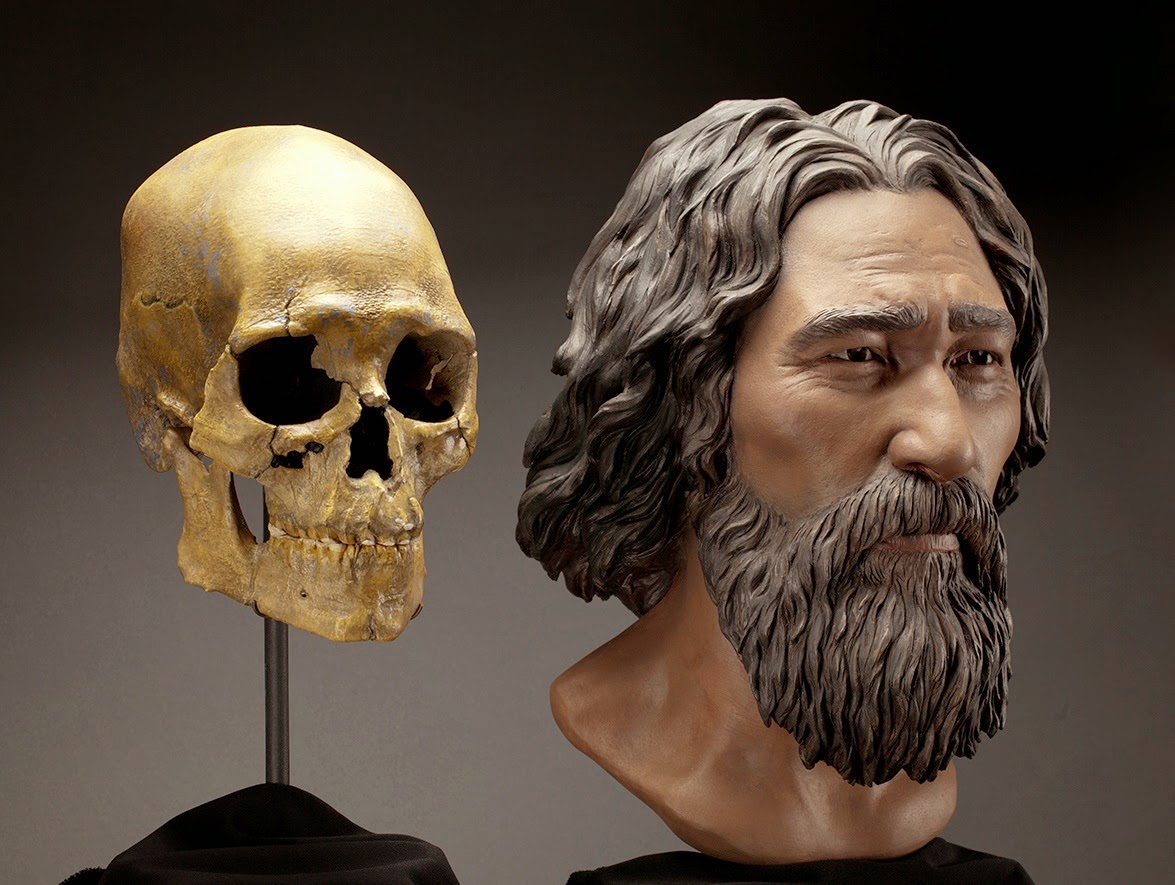
It seems that every year discoveries push back the date for the first Americans.  The January edition of the National Geographic magazine features an article on the discovery of a young teenaged girl who fell to her death into one of the many cenotes, or sink holes, in Central American Yucatan 12,000 to 13,000 years ago.  Although this date is roughly the date Clovis points were being manufactured in New Mexico and does not push back the date of first Americans,  of significance is its connection to the “Kennewick Man” discovered along the Columbia River in Washington.
 

Thursday, March 5, 2015

Native American Skies: Lunar Standstill in Chaco Canyon

March 05, 2015
  
Earth-Moon declinations
In any given month, the rising moon swings between two extremes on the eastern horizon, similar to the oscillation of the rising sun during the year.  When the moon reaches its maximum northern or southern declination, it has a “standstill” similar to the sun at summer and winter solstices.  The standstills could be said to be the moon’s equivalence to the Solar Solstices.  [for details on lunar standstills, refer to Native American Skies: Lunar Standstills]